
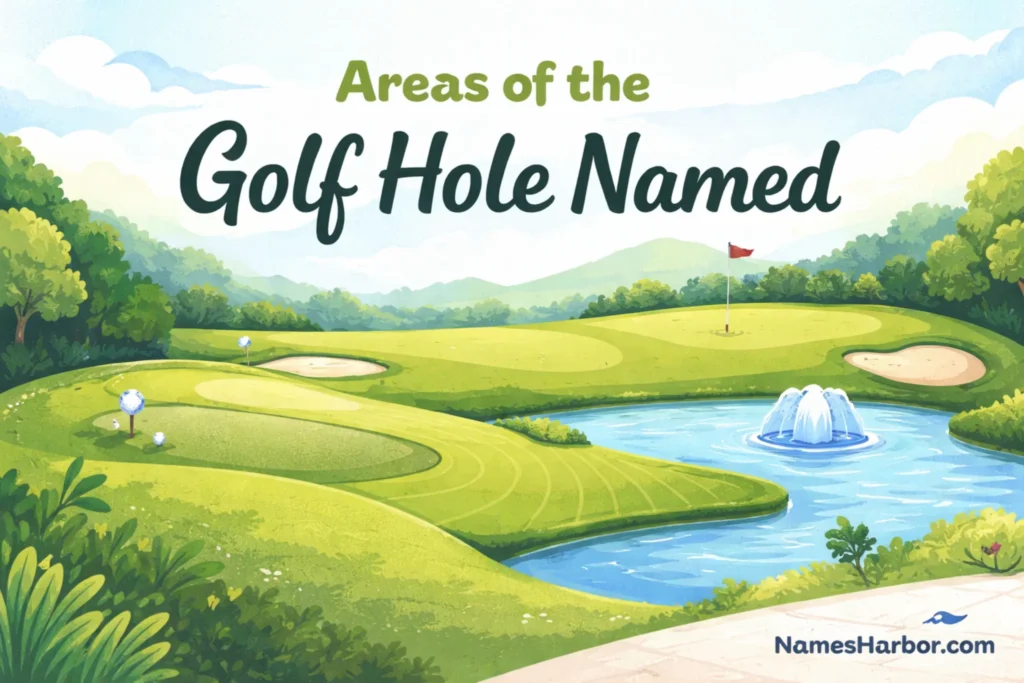
Golf is a game rich in history, precision, and strategy. A golf hole, with its unique design and multiple elements, is the central feature of any golf course. Whether you’re a seasoned pro or a beginner, understanding the various areas of the golf hole can enhance your appreciation of the game and improve your performance on the course.
This guide will take you through all the key areas of a golf hole, breaking down their function, significance, and how they can affect gameplay.
Table of Contents
Introduction to Golf Holes
Tee Box: The Starting Point
Fairway: The Path to the Green
Rough: The Challenge Beyond the Fairway
Bunkers: Obstacles to Avoid
Water Hazards: The Perils of the Course
The Green: The Final Destination
The Hole: A Vital Component
Golf Hole Layouts and Their Design
Golf Hole Strategies: Navigating the Course
Understanding Par and Yardage
Conclusion: Mastering the Golf Hole
Introduction to Golf Holes
A golf course consists of 18 holes, each offering its unique challenge. Every hole includes various components, each of which requires different skills to navigate. Understanding these areas not only helps you enjoy the game but also improves your strategy. Let’s break down each of these components so you can confidently approach your next round.
Tee Box: The Starting Point
The tee box is where every hole begins. Typically, it is located at the farthest point from the green. It provides players with an opportunity to hit the ball with power and precision right from the start.
Key Features:
- Tee Markers: Usually two markers (red, white, or blue) to indicate where to tee off.
- Distance: The length of the hole often dictates how far the tee box is from the green.
- Strategy: Choosing the right club and shot is crucial here, as this sets the tone for the entire hole.
Tips for the Tee Box:
- Use a driver or wood for long holes to maximize distance.
- For shorter holes, consider using an iron for better control.
Fairway: The Path to the Green
The fairway is the well-maintained portion of the golf hole that leads from the tee box to the green. It’s the area where golfers aim to land their shots for the best approach to the hole.
Key Features:
- Wide and Smooth: The fairway is typically flat and free of obstacles.
- Landing Zone: Hitting your ball into the fairway is vital for a good approach shot.
- Yardage: The fairway length determines how much distance is left to cover for your next shot.
Strategy for the Fairway:
- Aim for the middle of the fairway to avoid hazards on the sides.
- Take into account wind and weather conditions that can alter your shot’s trajectory.
Rough: The Challenge Beyond the Fairway
The rough is the area that lies just outside the fairway. It’s usually thicker grass or underbrush, making it harder to hit the ball accurately.
Key Features:
- Thicker Grass: It makes it difficult to hit the ball cleanly and can cause the ball to lose distance.
- Penalty for Missed Fairway: If you miss the fairway, the rough can penalize you by making the next shot harder.
Strategy for the Rough:
- Use a club that helps you get out of the rough, such as a 5-iron.
- Focus on making solid contact with the ball and getting back to the fairway if possible.
Bunkers: Obstacles to Avoid
Bunkers, or sand traps, are areas filled with sand and strategically placed near greens or along the fairway to add difficulty. They are one of the most feared obstacles in golf.
Key Features:
- Located Near Greens or Fairways: Bunkers are often placed to catch errant shots or to protect the green.
- Tough Shots: Hitting from a bunker requires technique to avoid the sand from slowing down your shot.
Tips for Bunker Shots:
- Focus on hitting the sand behind the ball to lift it out of the trap.
- Practice with a sand wedge to master bunker shots, which are ideal for this kind of terrain.
Water Hazards: The Perils of the Course
Water hazards such as ponds, streams, and lakes are often present on golf courses. These areas are designed to test a golfer’s skill and add an element of risk to their shots.
Key Features:
- Red or Yellow Stakes: Water hazards are marked with either red or yellow stakes, indicating the type of hazard.
- Penalties: If your ball lands in the water, you incur a one-stroke penalty.
Strategy for Water Hazards:
- Always plan your shot to avoid water hazards, especially on risky holes.
- When in doubt, consider laying up short of the water for a safer shot.
The Green: The Final Destination
The green is the most important part of a golf hole-the place where the flag and the hole itself reside. It’s the goal of every hole, and it’s where players attempt to putt the ball into the cup.
Key Features:
- Smooth Grass: The green is meticulously maintained to ensure the ball rolls smoothly toward the hole.
- Flagstick: The flagstick marks the exact location of the hole and can be removed during putting.
- Pin Position: The pin’s location varies daily, which can change the difficulty of putting.
Tips for Putting:
- Study the green’s slope to determine the best line to the hole.
- Practice putting regularly to improve your distance control and accuracy.
The Hole: A Vital Component
The hole itself, the final destination for the ball, is a cup with a diameter of 4.25 inches. It’s the object of every shot, and accuracy is crucial to sinking the ball.
Key Features:
- Diameter: The hole is precisely 4.25 inches wide and 4 inches deep.
- Cup Depth: The hole must be at least 4 inches deep to properly hold the flagstick and the ball.
Strategy for Sinking the Putt:
- Pay attention to the green’s speed, as it will affect your putt.
- Keep your head steady while putting and focus on making a clean strike.
Golf Hole Layouts and Their Design
Golf holes are often designed with a unique layout, considering challenges like water hazards, bunkers, and rough areas. The layout can significantly influence a player’s strategy.
Key Features:
- Doglegs: Some holes feature doglegs, which force players to aim for a corner rather than straight ahead.
- Par Design: The design of the hole often determines whether it’s a par-3, par-4, or par-5.
Tips for Hole Design:
- Understand the par and layout to make strategic decisions, especially on difficult holes.
- Practice reading hole designs to know where you might encounter hazards.
Golf Hole Strategies: Navigating the Course
Each golf hole requires a unique strategy. Some holes are straightforward, while others may require more nuanced decision-making.
Key Strategies:
- Play it Safe: For long holes, consider laying up instead of trying to reach the green in one shot.
- Know Your Limits: Recognize when a driver isn’t the best option, especially on narrow holes.
Additional Tips:
- Focus on accuracy over power when navigating tricky holes.
- Always assess the wind, weather, and course layout before hitting your shot.
Understanding Par and Yardage
Par is the expected number of strokes a skilled golfer would need to complete the hole. The yardage of the hole plays a major role in determining the par.
Key Features:
- Par-3: Short holes that typically require one shot to the green.
- Par-4: Medium-length holes that require a tee shot and an approach shot.
- Par-5: Long holes requiring three shots to reach the green.
Strategy for Par:
- Take note of the par and adjust your club selection accordingly.
Conclusion
Understanding the various areas of the golf hole, from the tee box to the green, can significantly improve your game. Each area offers unique challenges and opportunities, so learning how to navigate them will help you become a better golfer. Whether you’re working on your long game or focusing on short game accuracy, mastering each area of the golf hole is key to success.
FAQs
What is the purpose of the tee box?
The tee box is where players start each hole. It allows them to drive the ball down the fairway with distance and accuracy.
What is a dogleg hole?
A dogleg is a hole where the fairway bends to the left or right, requiring players to adjust their shots accordingly.
How do I hit from the rough?
Use a club with a lower loft and focus on making solid contact to avoid thick grass interference.
How are water hazards penalized in golf?
If your ball lands in a water hazard, you incur a one-stroke penalty and must take a drop from the hazard’s edge.What’s the best strategy for putting on the green?
Study the slope and speed of the green, aim for a steady stroke, and focus on distance control to avoid over or under-hitting.