
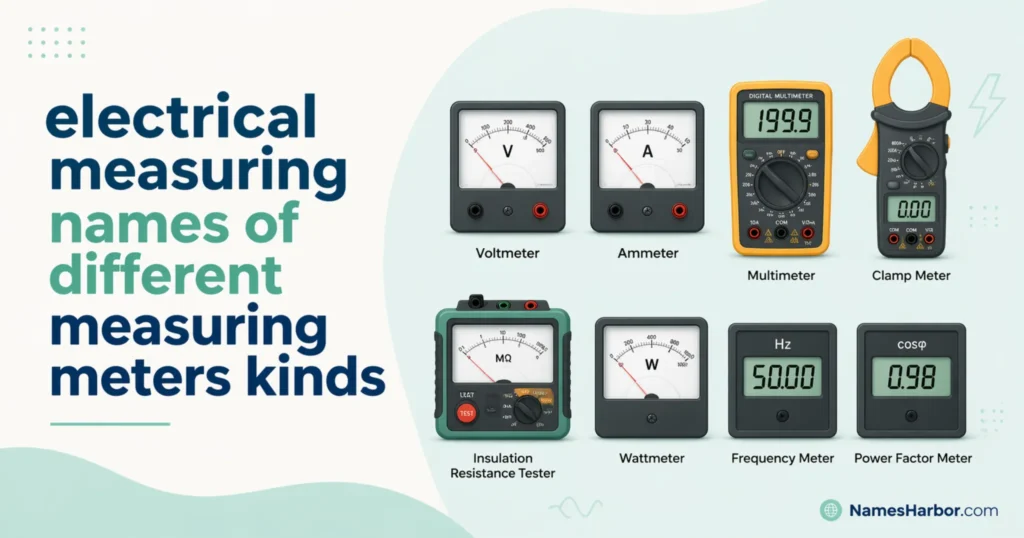
In today’s rapidly advancing technological world, understanding electrical measuring instruments is more crucial than ever. Whether you’re an electrical engineer, technician, or simply someone looking to learn about electrical measurements, knowing the different kinds of electrical meters and their applications can provide you with valuable insights. From basic voltage meters to more sophisticated power analyzers, each measuring tool serves a specific purpose.
This comprehensive guide will explore various types of electrical measuring meters, their uses, and key features. We will also delve into how to select the right meter for your needs. Let’s dive in!
Introduction to Electrical Measuring Meters
Electrical measuring meters, also known as electrical test equipment, are instruments used to measure and analyze electrical parameters such as voltage, current, resistance, and power. These devices are essential in diagnosing issues, ensuring safety, and optimizing electrical systems for residential, commercial, and industrial applications.
Why Are Electrical Measuring Meters Important?
Electrical meters are fundamental for:
- Accuracy: They help measure electrical values with precision.
- Safety: Proper measurement can prevent overloading or short circuits, ensuring the safety of electrical systems.
- Maintenance: Regular testing with meters helps identify problems before they become significant issues.
Voltage Meters
Voltage meters, also known as voltmeters, are used to measure the potential difference between two points in an electrical circuit. The unit of measurement is volts (V). They are crucial for checking the integrity of electrical systems and ensuring the correct voltage levels are maintained.
Types of Voltage Meters:
- Analog Voltmeters: These meters use a needle to point to the voltage level on a scale.
- Digital Voltmeters: They display voltage readings on a digital screen, offering more precision and ease of reading.
Applications:
- Measuring battery voltages
- Testing circuit integrity
- Diagnosing power supply problems
Current Meters (Ammeters)
Ammeters are used to measure the current flow through a circuit, typically in amperes (A). These meters are crucial for determining how much current is passing through a conductor, ensuring that the system does not overload.
Types of Ammeters:
- Analog Ammeters: These have a needle that moves across a scale to indicate current.
- Digital Ammeters: Digital versions provide precise readings and are easier to read.
Applications:
- Determining if a circuit is drawing excessive current
- Verifying electrical equipment load
Resistance Meters (Ohmmeters)
Resistance meters, or ohmmeters, measure the electrical resistance in a circuit.Resistance is measured in ohms (Ω), and these meters help in diagnosing the condition of components such as resistors, capacitors, and wires.
Types of Resistance Meters:
- Analog Ohmmeters: Use a moving needle to indicate resistance levels.
- Digital Ohmmeters: Provide more accurate readings, ideal for precise work.
Applications:
- Checking for faulty resistors
- Testing continuity in electrical wiring
Power Meters
Power meters measure the real power (measured in watts), apparent power (measured in volt-amperes), or reactive power (measured in volt-amperes reactive). These meters are essential in power management systems to ensure the proper functioning of electrical grids and systems.
Types of Power Meters:
- Single-phase Power Meters: Used for simple, single-phase power systems.
- Three-phase Power Meters: Designed for three-phase power systems, commonly used in industrial settings.
Applications:
- Energy consumption monitoring
- Industrial load balancing
Energy Meters (KWh Meters)
Energy meters are a specialized type of power meter used to measure the amount of electrical energy consumed over time. They are essential for monitoring energy usage and billing purposes in homes, businesses, and industries.
Types of Energy Meters:
- Electromechanical Energy Meters: Traditional mechanical meters that use a rotating disk to measure energy usage.
- Digital Energy Meters: Modern meters that offer digital readings and advanced features like remote monitoring.
Applications:
- Measuring electricity consumption for billing
- Monitoring energy efficiency
Frequency Meters
Frequency meters are used to measure the frequency of an alternating current (AC) circuit.Frequency is typically measured in hertz (Hz) and is critical for ensuring that electrical systems are operating within the required frequency range.
Types of Frequency Meters:
- Analog Frequency Meters: These use a needle and dial to display frequency.
- Digital Frequency Meters: Provide precise readings on a digital screen.
Applications:
- Ensuring AC power systems operate at the correct frequency
- Troubleshooting frequency-related issues in power systems
Clamp Meters
Clamp meters are a versatile type of ammeter used for measuring current. These meters can measure current without physically touching the conductor by clamping around the wire.
Types of Clamp Meters:
- AC Clamp Meters: Used for measuring alternating current.
- AC/DC Clamp Meters: These can measure both AC and DC currents.
Applications:
- Non-intrusive current measurement
- Ideal for working with live electrical circuits
Insulation Resistance Meters
Insulation resistance meters are designed to measure the resistance of the insulation material of electrical systems. The higher the resistance, the better the insulation is, which prevents the risk of short circuits and electrical faults.
Types of Insulation Resistance Meters:
- Handheld Meters: Portable and suitable for quick checks.
- High-voltage Insulation Meters: Used for testing high-voltage systems.
Applications:
- Testing the insulation in cables, transformers, and electrical equipment
- Ensuring the safety of high-voltage equipment
Earth Ground Resistance Meters
Ground resistance meters are essential for testing the effectiveness of grounding systems. Proper grounding ensures safety by providing a path for excess electrical current to flow into the earth.
Types of Ground Resistance Meters:
- Clamp-on Ground Resistance Meters: These measure ground resistance without the need to disconnect the grounding system.
- Traditional Ground Testers: Require electrode placement in the ground for testing.
Applications:
- Checking the efficiency of grounding systems
- Ensuring compliance with electrical safety standards
Select the Right Meter for Your Needs
Choosing the right electrical measuring meter depends on several factors:
- Purpose of Measurement: Ensure the meter matches the specific parameter you need to measure (voltage, current, resistance, etc.).
- Accuracy Requirements: For high-precision tasks, opt for digital meters over analog.
- Environment: Consider the type of environment you’re working in (e.g., high voltage or industrial settings) to select the appropriate meter.
Conclusion
Electrical measuring meters play a vital role in the maintenance and operation of electrical systems. From voltage meters to clamp meters, each type of meter is tailored to specific measurement needs. By understanding the different types of meters and their applications, you can ensure accurate, efficient, and safe electrical measurements.
When selecting a meter, always consider the type of measurement required, the environment, and the level of precision needed. By investing in high-quality, reliable electrical measuring meters, you ensure the longevity and safety of your electrical systems.
FAQs
What is the most commonly used electrical meter?
The most commonly used electrical meter is the voltmeter, which measures the voltage across two points in a circuit.
Can I use a clamp meter for both AC and DC measurements?
Yes, modern clamp meters can measure both alternating current (AC) and direct current (DC).
What is the difference between a power meter and an energy meter?
A power meter measures the instantaneous power of a system, while an energy meter measures the total energy consumption over time.
Why is insulation resistance important?
Insulation resistance ensures the safety of electrical systems by preventing short circuits and electrical faults caused by damaged or degraded insulation.
How can I measure the frequency of my electrical system?
You can use a frequency meter, which measures the frequency of an AC circuit in hertz (Hz).