
Micrometers are among the most important instruments used in mechanical engineering, quality control, and manufacturing processes. These tools allow for highly accurate measurements of small dimensions, making them indispensable in various industries. If you’re looking to understand the components of a micrometer and how they work together to provide precise readings, this guide is for you.
In this article, we will break down the named parts of a micrometer, explain their functions, and show you how each part contributes to the overall measurement process. By the end, you’ll have a comprehensive understanding of micrometers and their essential components, which will help you use them effectively for any precision measurement task.
Table of Contents
Introduction to Micrometers
The Importance of Micrometers in Precision Measurement
Overview of Micrometer Parts
The Frame of the Micrometer
The Anvil: One of the Most Crucial Parts
The Spindle: The Micrometer’s Measuring Surface
The Thimble: How It Controls the Measurement
The Ratchet Mechanism for Consistent Measurement
The Sleeve and Its Role in Precision
The Measuring Scale: Reading the Measurement
The Lock Nut: Securing the Measurement
Conclusion
FAQs
Introduction to Micrometers
Micrometers are precision instruments that measure the thickness or diameter of small objects with extreme accuracy. They are typically used to measure dimensions such as the diameter of small parts, thickness of wires, or the outer dimensions of small mechanical components. This ability to measure within microns (one-millionth of a meter) makes them highly valuable in fields like mechanical engineering, manufacturing, and quality control.
Before you begin using a micrometer, it’s important to understand the named parts of the micrometer and how they contribute to its functionality.
The Importance of Micrometers in Precision Measurement
In many industries, measurements need to be incredibly accurate. Whether you’re working with mechanical parts, gears, or other fine components, precision is key. Micrometers provide a level of accuracy that many other tools cannot match. They are commonly used for tasks that require precision measurement, such as:
- Measuring small parts in mechanical engineering
- Ensuring that metal parts fit together properly in manufacturing
- Quality control in production processes
- Calibration of machines and tools
With their exceptional precision, micrometers are indispensable when you need to measure the smallest of parts.
Overview of Micrometer Parts
A micrometer may look like a simple tool at first glance, but it is made up of several named parts that work together to provide accurate measurements. Let’s take a look at each component and how it contributes to the micrometer’s function.
The Frame of the Micrometer
The frame is the base of the micrometer and holds all the other parts together. It is typically made of metal and is designed to provide a stable structure for measuring objects. The frame is also important because it ensures that the measurements are aligned correctly and are taken from the right reference point.
Key Features:
- Provides the structure for the entire instrument
- Ensures accurate alignment during measurement
- Typically made of high-strength metal for durability
The Anvil: One of the Most Crucial Parts
The anvil is the fixed measuring surface of the micrometer. It is located at one end of the frame and provides a stable base against which the object being measured is placed. The anvil is usually made of hardened steel or carbide to ensure that it doesn’t wear down over time, providing a consistent reference point for each measurement.
Key Features:
- Fixed measuring surface that holds the object
- Usually made of hardened steel or carbide for durability
- Helps ensure stable, precise measurements
The Spindle: The Micrometer’s Measuring Surface
The spindle is the part of the micrometer that moves towards the anvil to take the measurement. When you turn the micrometer’s handle, the spindle advances, closing the gap between it and the anvil. The spindle is often coated with a non-slip material to ensure that it moves smoothly and accurately.
Key Features:
- Moves toward the anvil to measure objects
- Precision-ground surface for accurate measurements
- Can be adjusted using the thimble to take readings
The Thimble: How It Controls the Measurement
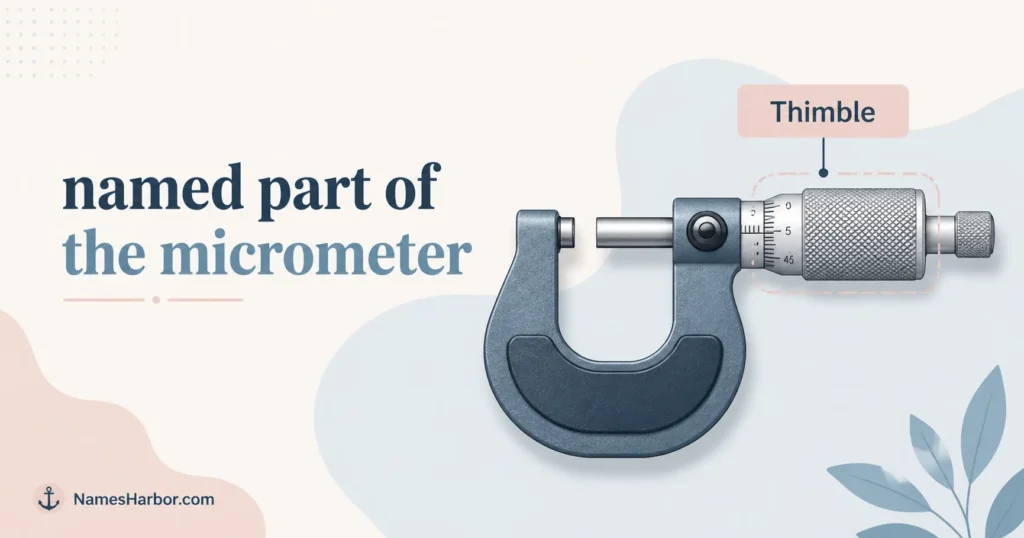
The thimble is an essential part of the micrometer that controls the movement of the spindle. It is a small, cylindrical part that is turned to move the spindle toward the anvil. As the thimble is turned, it moves the spindle a precise amount, allowing you to take measurements to a high level of accuracy.
Key Features:
- Controls the movement of the spindle
- Typically marked with a scale for measurement
- Provides fine adjustments to measure to the nearest thousandth of an inch or millimeter
The Ratchet Mechanism for Consistent Measurement
The ratchet mechanism is a built-in feature in many micrometers that ensures consistent measurement pressure. This mechanism helps to apply the same amount of force every time you measure, preventing inaccuracies caused by varying hand pressure.
Key Features:
- Ensures consistent force when measuring
- Prevents over-tightening and inaccurate readings
- Can be found in micrometers designed for high precision
The Sleeve and Its Role in Precision
The sleeve is the part of the micrometer where the thimble is attached. It contains a scale that allows you to read the measurements. The sleeve is calibrated in such a way that it complements the thimble’s markings, providing a more precise reading.
Key Features:
- Contains the scale that reads the measurement
- Works with the thimble to provide accurate readings
- Typically made of a hardened material for durability
The Measuring Scale: Reading the Measurement
The measuring scale on a micrometer is the reference for determining the measurement of an object. It is divided into two parts: the main scale on the sleeve and the finer scale on the thimble. When the spindle moves towards the anvil, the measurement is taken based on how far the thimble has moved along the sleeve’s scale.
Key Features:
- Comprised of the main scale and thimble scale
- Allows for accurate reading of micrometer measurements
- Typically marked in either millimeters or inches, depending on the micrometer
The Lock Nut: Securing the Measurement
The lock nut is a small but crucial part that helps secure the spindle in place once the measurement has been taken. By tightening the lock nut, you can ensure that the measurement remains unchanged until you are ready to release it. This is especially important when measuring multiple objects to ensure consistency.
Key Features:
- Secures the spindle in place once the measurement is taken
- Prevents any movement or changes in the measurement after reading
- Can be adjusted for fine-tuning the measurement
Conclusion
Understanding the named parts of a micrometer is crucial for anyone working with precision measurements. Each component plays a vital role in ensuring that the tool performs accurately and consistently. Whether you’re using a micrometer for quality control in manufacturing or for research purposes in engineering, knowing how these parts function will help you use the tool to its full potential.
FAQs
What is the main function of the anvil in a micrometer?
The anvil provides a fixed measuring surface against which the object being measured is placed, ensuring accurate and stable readings.
Why is the thimble important in a micrometer?
The thimble controls the movement of the spindle and allows for fine adjustments to achieve precise measurements.
What does the ratchet mechanism do?
The ratchet mechanism ensures that consistent pressure is applied when taking measurements, preventing errors caused by varying hand pressure.
How do you read a micrometer?
You read a micrometer by combining the readings from the sleeve and the thimble scale. Together, they provide the precise measurement of the object.
Can a micrometer measure both inches and millimeters?
Yes, micrometers are available in both imperial (inches) and metric (millimeters) versions, allowing for versatile measurement options.