
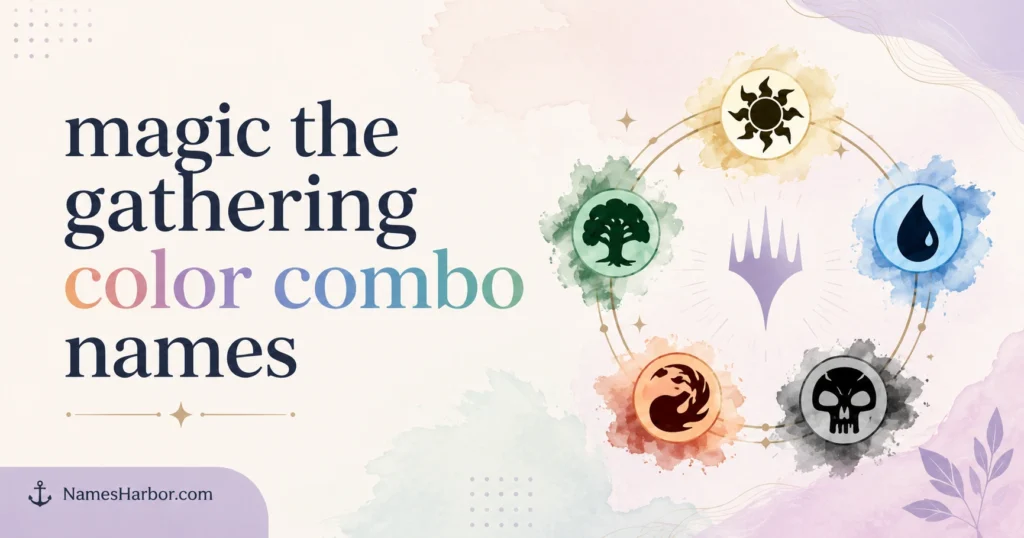
Magic: The Gathering (MTG) is not just a card game-it’s a universe of strategy, creativity, and infinite possibilities. One of the most fascinating aspects of MTG is its color system. Each color has unique strengths, weaknesses, and playstyles. When combined, these colors form dynamic color combos that can define your deck strategy. In this guide, we’ll explore all the essential Magic the Gathering color combo names, their characteristics, and practical tips for mastering them.
Understanding MTG Colors: The Basics 🎨
MTG has five primary colors:
- White (W): Focuses on order, protection, and life-gain mechanics.
- Blue (U): Specializes in control, card draw, and manipulation.
- Black (B): Deals with sacrifice, removal, and life-draining strategies.
- Red (R): Excels in aggression, direct damage, and speed.
- Green (G): Offers growth, ramp, and creature strength.
Each color represents not only strategy but also philosophy. Combining these colors allows players to create multi-dimensional decks, unlocking synergies that can surprise opponents.
Mono-Color Decks: Simplicity and Focus ⚡
Mono-color decks stick to one color, offering consistency and clarity. Some examples include:
- Mono-White: Efficient creatures, protection, and life gain.
- Mono-Blue: Counterspells, card advantage, and control.
- Mono-Black: Removal-heavy with sacrifice mechanics.
- Mono-Red: Aggressive, fast, burn-focused strategies.
- Mono-Green: Big creatures, mana ramp, and natural growth.
Mono-color decks are often the first choice for beginners because they are simple to manage and predict.
Two-Color Combos (Guilds) 🏰
Two-color decks, known as guilds in MTG lore, combine complementary colors for more diverse strategies. Here are the ten official guilds and their color combo names:
| Color Combo | Guild Name | Strategy Highlights |
| W + U | Azorius | Control, defense, flying creatures |
| U + B | Dimir | Stealth, milling, disruption |
| B + R | Rakdos | Aggression, burn, sacrifice |
| R + G | Gruul | Big creatures, aggression |
| G + W | Selesnya | Tokens, life gain, growth |
| W + B | Orzhov | Life drain, control, value plays |
| U + R | Izzet | Spells, card draw, chaos effects |
| B + G | Golgari | Graveyard synergy, recursion |
| R + W | Boros | Aggressive, combat-focused |
| G + U | Simic | Growth, ramp, adaptability |
Each guild’s identity is not just mechanical but flavor-based, reflecting their lore and philosophy.
Three-Color Combos (Shards & Wedges) 🔺
Three-color decks can either form shards (one color paired with its two allied colors) or wedges (one color paired with its two enemy colors).
Shards:
- Bant (WUG): Balance of order, growth, and intellect.
- Esper (WUB): Artifacts, control, and precision.
- Grixis (UBR): Aggression, disruption, and card advantage.
- Jund (BRG): Sacrifice, big creatures, and efficiency.
- Naya (RGW): Aggressive creatures and synergy with tokens.
Wedges:
- Abzan (WBG): Life gain, resilience, midrange power.
- Jeskai (URW): Spellslinger with tempo and combat tricks.
- Sultai (BUG): Graveyard strategies, control, and card advantage.
- Mardu (RWB): Aggressive midrange with removal.
- Temur (GUR): Creature ramp with spell support.
Three-color combos unlock complex synergies but require careful mana management.
Four-Color Combos: Power Without Limits ⚡
Four-color decks are rarely mono or dual-focused but allow players to mix almost every strategy. They are identified by the color that is missing:
- Without White (UBRG): Aggro-control with removal and recursion.
- Without Blue (WRBG): Creature-heavy midrange strategies.
- Without Black (WRGU): Spells and growth synergy.
- Without Red (WBUG): Focused on control, recursion, and card advantage.
- Without Green (WUBR): Aggressive removal and tempo strategies.
These decks are more complex and suited for experienced MTG players who want to explore high-powered interactions.
Five-Color Decks: Ultimate Versatility 🌈
A five-color deck includes all colors (WUBRG), representing ultimate versatility. Advantages include:
- Access to every strategy and synergy.
- Ability to answer almost any opponent threat.
- Complex gameplay with diverse card interactions.
Drawbacks:
- High mana complexity.
- Consistency issues if mana fixing is poor.
These decks are often seen in Commander format or casual high-fantasy play.
Choosing the Right Color Combo for Your Playstyle 🧩
Selecting a color combo depends on:
- Aggression vs Control: Red and Green favor fast aggression; Blue and White favor control.
- Graveyard vs Tokens: Black and Green excel with graveyard recursion; White and Green with token generation.
- Mana Complexity: Multi-color decks need better mana bases, including dual lands or mana-fixing cards.
Example: A Simic (GU) deck suits players who enjoy ramping into big creatures, while a Dimir (UB) deck suits those who prefer stealth and disruption.
MTG Color Combo Names in Commander Format 🏆
In Commander, multi-color decks are common due to singleton restrictions. Popular combinations include:
- Azorius (WU): Strong control and counterspells.
- Mardu (RWB): Aggressive combat and removal.
- Sultai (BUG): Graveyard synergy and value.
- Jund (BRG): Midrange creatures and efficiency.
- Five-Color (WUBRG): Full access to all strategies.
Understanding these names helps communicate deck strategy in multiplayer games.
Common Mistakes When Using Color Combos ❌
- Overcomplicating Mana: Too many colors without proper fixing.
- Ignoring Synergy: Picking colors without considering interaction.
- Neglecting Strategy: Prioritizing flashy combos over cohesive gameplay.
- Overloading on Cards: Not balancing removal, creatures, and spells.
Practical Tip: Start with two-color combos and expand once comfortable with mana management.
Tips for Mastering Color Combos in MTG 🎯
- Test combinations in casual or online MTG Arena.
- Use pre-built decks to understand strengths and weaknesses.
- Adjust your deck depending on meta trends.
- Prioritize synergies between cards and color strengths.
- Keep mana balance consistent for smoother gameplay.
Example: Pairing Izzet (UR) spells with Simic (GU) ramp can create a hybrid control-aggro deck if managed carefully.
Popular Magic the Gathering Color Combo Names Explained 🔍
Some combos are especially famous:
- Bant (WUG): Known for defensive play and flying creatures.
- Grixis (UBR): Offers aggressive spells and removal.
- Jund (BRG): Dominates with efficient creatures and removal.
- Temur (GUR): Great for ramping into large threats.
- Five-Color (WUBRG): Versatile and unpredictable.
Recognizing these names helps you quickly understand deck philosophy and style.
Conclusion
MTG color combos are more than just names-they define your strategy, deck synergy, and playstyle. From simple mono-color decks to versatile five-color builds, mastering Magic the Gathering color combo names empowers you to dominate games and create unforgettable moments. Experiment, test, and adapt your combos to become an MTG master.
FAQs
What is a color combo in MTG?
A color combo combines two or more colors, creating strategic synergy and defining your deck’s playstyle.
How many two-color combos exist in MTG?
There are ten two-color combos, known as guilds, each with unique strategies.
What is a shard in MTG?
A shard is a three-color combo that combines one color with its two allied colors, like Bant (WUG).
Which color combo is best for beginners?
Mono-color decks or two-color guilds like Azorius (WU) are beginner-friendly.
Can five-color decks work in competitive play?
Yes, but they require precise mana fixing and careful deck-building for consistency.