
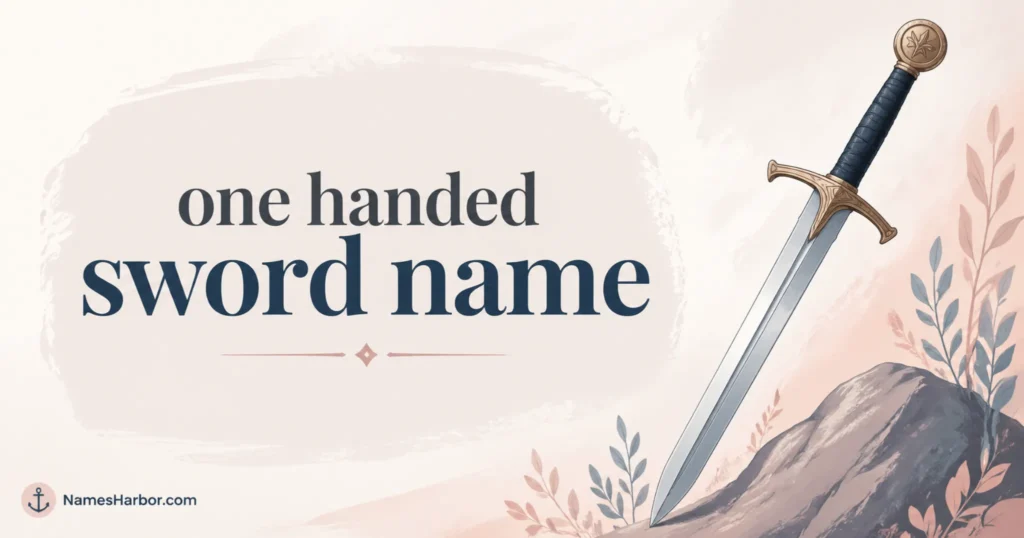
A one-handed sword has a rich history that spans centuries. Known for its versatility, speed, and practicality, this weapon has been a staple in various cultures, from medieval Europe to Asia. If you’re a history enthusiast, a collector, or simply intrigued by the craftsmanship behind these blades, you’ll find the world of one-handed swords fascinating. In this article, we will delve into the most popular one-handed sword names, their features, historical significance, and uses.
What is a One-Handed Sword?
A one-handed sword is a type of weapon designed to be wielded with one hand, offering ease of movement and quicker strikes compared to larger, two-handed swords. Unlike longer swords like the broadsword, which require both hands to wield efficiently, one-handed swords allow the user to maintain control while leaving the other hand free for a shield, dagger, or other tools.
These swords typically have a shorter blade and are known for their agility, making them ideal for fast-paced combat.
The Evolution of One-Handed Swords
The history of one-handed swords is long and diverse, with designs and techniques evolving over time. From ancient civilizations to medieval knights, the one-handed sword has been a companion to warriors on battlefields and in duels.
- Ancient Civilizations: Early one-handed swords were used by the Romans and Greeks. The gladius, for instance, was a short, one-handed sword favored by Roman soldiers.
- Middle Ages: During the medieval period, knights began using swords like the arming sword, which was a one-handed weapon often paired with a shield. This type of sword became a symbol of chivalry and knighthood.
- Renaissance to Modern Day: The one-handed sword continued to evolve into forms like the rapier, which was used for dueling in the Renaissance era. Today, one-handed swords are still used in historical reenactments and fencing.
Types of One-Handed Swords
The versatility of one-handed swords led to the creation of various types, each suited for specific purposes. Below are some of the most popular types:
- Arming Sword: A simple, one-handed sword that became the standard weapon for knights in the early medieval period.
- Longsword: While typically a two-handed sword, some versions were designed to be wielded with one hand. The longsword’s long blade allowed it to be used effectively in both offense and defense.
- Rapier: A slender, sharp sword designed for thrusting, favored by duellists in the Renaissance period.
- Sabre: A curved one-handed sword that was primarily used by cavalry soldiers. Its design is perfect for slicing and cutting.
Famous One-Handed Swords in History
Many famous swords throughout history are classified as one-handed. These swords not only had significant historical importance but also became iconic symbols of strength, honor, and bravery.
- Excalibur: The legendary sword of King Arthur, Excalibur is perhaps the most famous one-handed sword in Western literature. It symbolizes power and kingship.
- Durandal: The sword of the French knight Roland, Durandal is steeped in legend and is considered one of the greatest one-handed swords in European history.
- Joyeuse: The sword of Charlemagne, Joyeuse was said to be magical and was used during many of Charlemagne’s battles.
The Craftsmanship Behind One-Handed Swords
Creating a one-handed sword requires exceptional skill and knowledge of metallurgy. Swordsmiths have been perfecting the craft for centuries, and today, many sword makers still follow traditional techniques.
- Materials: One-handed swords are often made from high-quality steel, such as carbon steel, which provides durability and sharpness. In some cases, they are adorned with gold or silver fittings.
- Forging Process: The process of creating a one-handed sword involves folding the steel multiple times to ensure strength and flexibility. Modern swordsmiths sometimes use more advanced methods, but traditional techniques remain highly valued.
- Design: The hilt and grip are also important in the overall design. Swordsmiths often use materials like leather, wood, and brass for the hilt to ensure a comfortable yet firm grip during use.
How to Choose the Right One-Handed Sword
Selecting the right one-handed sword depends on the intended use, personal preference, and historical accuracy. Here are a few factors to consider when choosing a one-handed sword:
- Length of the Blade: Depending on the type of combat (e.g., dueling or combat training), you might prefer a longer or shorter blade.
- Balance: A well-balanced sword allows for faster and more controlled strikes. Ensure the sword feels comfortable when held and swings naturally.
- Material: For collectors, the material is important. High-quality steel or Damascus steel is often the best choice for both functional and ornamental swords.
One-Handed Swords in Combat and Warfare
One-handed swords were used extensively in both hand-to-hand combat and mounted warfare. The combination of speed, mobility, and the ability to wield a shield made one-handed swords a perfect weapon for various combat scenarios.
- Dueling: In the Renaissance period, one-handed swords like rapiers were primarily used for dueling. Their thin, flexible blade allowed for precise thrusts and defensive maneuvers.
- Battlefield Use: In the medieval period, knights carried one-handed swords alongside shields to engage in close combat. These swords were effective in slashing and stabbing opponents.
- Cavalry: Cavalry soldiers favored sabres and other curved one-handed swords for their ability to deliver powerful slashes while riding on horseback.
Sword Fighting Techniques for One-Handed Swords
Mastering the art of sword fighting with a one-handed sword requires practice and discipline. Techniques vary based on the style of sword being used, but there are a few common principles across all types.
- Guarding: Holding the sword in a defensive position (guard) allows the fighter to protect themselves from incoming strikes.
- Attacking: Swift strikes aimed at weak points, such as the opponent’s head or limbs, are common with one-handed swords.
- Counterattacking: A skilled swordsman can use their free hand for defense, allowing them to perform counterattacks or grab additional weapons.
The Legacy of One-Handed Swords
The legacy of the one-handed sword is evident in modern sword fighting sports such as fencing, where the techniques of the rapier and longsword are still practiced. The one-handed sword remains a symbol of martial skill, historical warfare, and personal valor.
Even today, one-handed swords are a staple in popular culture, appearing in movies, video games, and fantasy novels. Their iconic status as the weapon of choice for knights and warriors continues to capture the imagination of people around the world.
FAQs
What is the difference between a one-handed sword and a two-handed sword?
A one-handed sword is shorter and lighter, designed to be wielded with one hand, whereas a two-handed sword requires both hands for control and balance.
Are one-handed swords still used today?
Yes, one-handed swords are still used in historical reenactments, martial arts training, and occasionally in sword fighting competitions.
How do I maintain my one-handed sword?
Regularly clean and oil the blade to prevent rust. Store the sword in a dry place and ensure the hilt is secure.
What’s the best one-handed sword for beginners?
For beginners, an arming sword or a longsword designed for single-hand use is a great choice due to its balance and versatility.
Why were one-handed swords popular in medieval times?
One-handed swords were easy to wield, quick in battle, and could be used with a shield, making them ideal for knights and soldiers.
Conclusion:
From the legendary Excalibur to the everyday arming sword, one-handed swords have stood the test of time as symbols of combat prowess and craftsmanship. Whether you’re a collector, a martial artist, or simply a fan of historical weaponry, the one-handed sword remains a fascinating part of our martial heritage.
Explore, study, and appreciate these iconic blades, and who knows, maybe you’ll find the perfect one-handed sword for yourself!